Meet the team: Vipingo Ridge Conservation Manager
As Vipingo Ridge launches it’s first Impact Report, we meet Kuso Abdulla, the Conservation Manager at Vipingo Ridge, and a key part our Space to Thrive programme. Here he talks about our Winning Space for Wildlife commitment and answers questions about the work happening at Vipingo Ridge.
1. Can you walk us through the origin story how did "Winning Space for Wildlife" move from concept to a licensed KWS partnership?
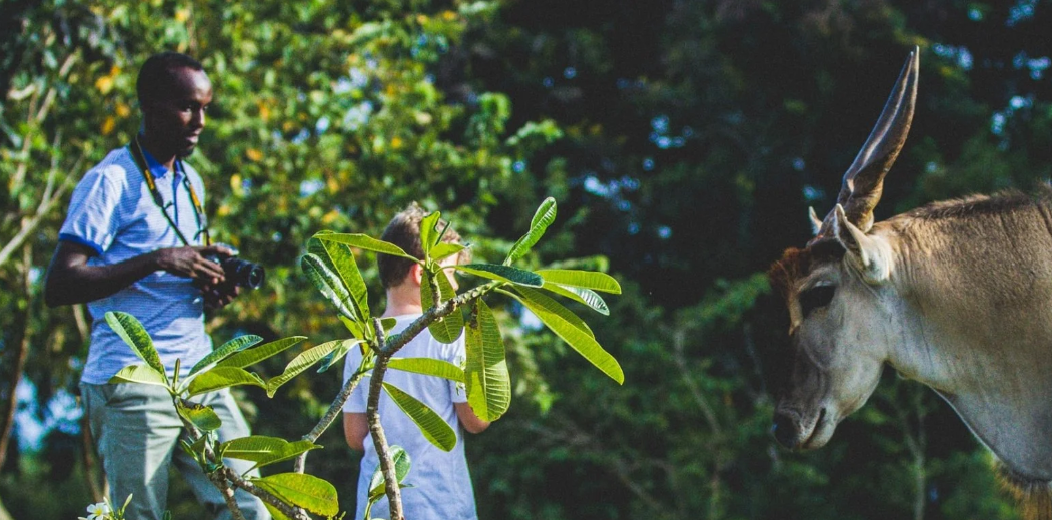
The idea behind "Winning Space for Wildlife" grew from a simple but ambitious vision: to demonstrate that conservation and responsible development can coexist and that more people can give land for conservation. As Vipingo Ridge expanded, we recognised an opportunity to intentionally integrate wildlife conservation into the landscape. Working closely with the Kenya Wildlife Service (KWS), we developed a long-term conservation plan that met national wildlife management standards and the sanctuary was formally licensed by KWS. Today, that partnership provides the legal framework, technical guidance, and accountability needed to ensure the sanctuary contributes meaningfully to Kenya's conservation efforts.
2. Beyond the giraffes, how do you decide which species to introduce, and in what order? What does the KWS habitat assessment process actually involve?
Species selection is driven by ecological suitability. Every proposed introduction begins with a habitat assessment led by KWS and supported by ecological experts. The assessment evaluates food availability, water resources, habitat quality, carrying capacity, disease risks, existing wildlife populations, and potential human-wildlife interactions. This careful, science-based approach helps establish balanced ecosystems while ensuring every translocation has the highest chance of long-term success.
3. How do you balance the needs of a working golf resort and residential estate with the space and quiet that wildlife like giraffes, eland, and wildebeest need?
Balance comes through careful planning and adaptive management. Wildlife movement corridors have been protected within the estate, visitor activities are carefully managed, and development is designed to minimise disturbance to key habitats. Continuous monitoring allows us to understand how animals respond to human activity and adjust management where necessary. Rather than competing with each other, different land uses become complementary.
4. What have been the hardest trade-offs land, budget, guest safety, resident concerns in "winning" more space back for wildlife over the years?
Conservation requires difficult decisions. Land that could have been developed has instead been preserved for wildlife habitat and ecological connectivity. Investment in fencing, ranger operations, veterinary care, monitoring systems, and habitat restoration represents a significant long-term commitment. At the same time, we must carefully manage guest expectations and resident safety while ensuring wildlife can behave naturally. These challenges require continuous dialogue, education, and evidence-based decision-making, but they have strengthened our commitment to sustainable development.
5. How is the wildlife corridor network designed, and how do you make sure it stays connected as the estate itself grows?
The corridors are designed around the natural movement patterns of wildlife. Sensitive habitats and movement routes are identified and protected, allowing ecological connectivity to remain a priority in estate planning. As the estate evolves, conservation planning remains integrated into future developments to ensure wildlife continues to move safely across the landscape.
6. What role does the rewilding and native tree-planting programme play in supporting the animals, versus just being an environmental initiative in its own right?
Rewilding is fundamental to wildlife conservation because native vegetation provides food, shelter, breeding habitat, shade, and ecological resilience for many species. Restoring indigenous ecosystems also supports pollinators, birds, reptiles, and smaller mammals while improving soil health and water retention.
7. Tell us about the vet care and monitoring routine what does "success" look like day-to-day for the sanctuary team?
Success is measured through proactive wildlife management. Rangers conduct routine patrols and monitoring, recording wildlife observations, habitat conditions, and any emerging threats. Veterinary support is provided whenever necessary, including monthly health assessments, treatment, and rescues, in collaboration with KWS. Success means seeing healthy animals exhibiting natural behaviour, breeding successfully, and requiring minimal intervention because the ecosystem is functioning as intended.
8. The MOU with Reteti Elephant Sanctuary points toward future translocations what's next on the species roadmap?
Our partnership with Reteti Elephant Sanctuary demonstrates the value of collaboration in wildlife conservation. Looking ahead, we intend to continue strengthening genetically healthy populations of species. Any future introductions will continue to follow scientific assessments, habitat evaluations, and long-term management planning.
9. How do you measure whether the programme is actually achieving its conservation goal (e.g. genetic diversity, breeding success, reintroduction potential) rather than just being a visible amenity?
We monitor breeding success, population trends, habitat condition, wildlife health, survival rates following translocations, and the effectiveness of habitat restoration efforts. We also evaluate the sanctuary's contribution to conservation education, partnerships, and community engagement. These indicators demonstrate that the sanctuary is delivering measurable conservation value beyond enhancing the visitor experience.
10. What's the long-term vision 10 years from now, what does "Winning Space for Wildlife" look like at full maturity?
We plan to establish Vipingo Ridge as one of Kenya's leading examples of integrated conservation and sustainable development. In ten years, we see a thriving sanctuary with self-sustaining wildlife populations, restored indigenous habitats, expanded conservation education programmes, robust scientific monitoring, and meaningful partnerships with conservation organizations. We also envision the sanctuary serving as a model that inspires other landowners and developers to incorporate biodiversity conservation into their long-term planning.
11. What would you say to other developers or estates considering a similar model what's the one thing you wish you'd known at the start?
Conservation is a long-term commitment. Success depends on building partnerships early, involving conservation experts in planning, and recognizing that healthy ecosystems create lasting value for communities, businesses, and biodiversity alike. Looking back, we would encourage others to integrate conservation from the earliest stages of development because it is far more effective.
On the Impact Report
12. Why now? What made this the right moment to formalise the sanctuary's work into a first impact report?
After several years of building the sanctuary, introducing wildlife, restoring habitats, and strengthening partnerships, we had reached a point where meaningful results could be measured and shared. Producing our first impact report allows us to celebrate achievements, demonstrate accountability, communicate transparently with stakeholders, and establish a baseline against which future progress can be measured.
13. What data or outcomes are you most proud to finally have documented and quantified?
We're particularly proud to document breeding success among introduced species, habitat restoration efforts, conservation education outreach, visitor engagement, and the strength of our partnerships. These indicators show that the sanctuary is delivering tangible conservation outcomes.
14. Were there any surprises in pulling the report together things the numbers revealed that the day-to-day work hadn't made obvious?
The process highlighted just how interconnected our programmes have become. Activities that often seem independent are actually reinforcing one another to create a broader impact. Quantifying these efforts also revealed the scale of work undertaken by the team, much of which had previously gone undocumented.
15. How do you see this first report being used internally for planning, externally for credibility (investors, buyers, KWS, Ecotourism Kenya), or both?
Internally, the report helps guide strategic planning, prioritize investments, and improve monitoring. Externally, it demonstrates transparency, accountability, and measurable impact to our conservation partners, investors, homeowners, and prospective visitors.
16. What gaps or limitations did you run into while compiling it, and how will future reports close them?
Historical baseline data were limited in some areas. We are strengthening standardized data collection, monitoring protocols, and performance indicators. Future reports will include longer-term trend analysis, more comprehensive biodiversity metrics, and stronger evidence of ecological change over time.
17. How does this report tie into the Gold Eco-rating and other accreditations Vipingo Ridge holds does it strengthen the case for those, or is it a separate track?
The report complements our existing accreditations by providing measurable evidence behind our sustainability commitments. While certification assesses compliance with recognised standards, the impact report demonstrates tangible conservation outcomes and continuous improvement.
18. What would you consider the single most meaningful metric or milestone in this first report?
The report connects together the ‘purpose’ of Vipingo Ridge for the first time, connection nature, ocean, community and our future into our Space to Thrive framework - this is a milestone in itself. For me personally, the most meaningful milestone is the successful establishment of a functioning wildlife sanctuary where introduced species are surviving, adapting, and reproducing naturally.
19. Looking ahead, what would you want the second and third impact reports to be able to show that this one can't yet?
Future reports should demonstrate long-term population trends, greater biodiversity recovery, expanded habitat restoration, stronger ecological connectivity, measurable climate resilience benefits, increased research outputs, and deeper community impact. We are confident they will show that the sanctuary has become a mature, self-sustaining conservation landscape that continues to create lasting value for wildlife and people alike.
Summary: A Conservation Perspective
Winning Space for Wildlife
"Conservation and responsible development can coexist and together, they can create landscapes where both people and wildlife thrive."
This philosophy continues to shape Vipingo Ridge's approach to conservation. What began as an ambitious vision has evolved into a Kenya Wildlife Service (KWS)-licensed sanctuary that demonstrates how thoughtful planning, scientific management, and long-term partnerships can deliver meaningful conservation outcomes.
Every decision from species introductions to habitat restoration is guided by ecological science. Wildlife corridors are protected, indigenous habitats are restored, and continuous monitoring ensures that wildlife can move, feed, breed, and thrive naturally within the estate. Success is measured not only by healthy wildlife populations, but by the resilience of the ecosystems that support them.
Achieving this balance requires long-term commitment. Parts of the development have been designated as habitat, while ongoing investments in wildlife monitoring, veterinary care, research, and ecological restoration reflect Vipingo Ridge's belief that conservation creates lasting value for both nature and people.
Looking ahead, the vision is to establish Vipingo Ridge as one of Kenya's leading examples of integrated conservation and sustainable development a place where thriving wildlife populations, restored indigenous habitats, scientific research, and meaningful partnerships inspire others to embrace conservation as part of responsible land stewardship.
Why This Report Matters
The publication of Vipingo Ridge's inaugural Impact Report marks an important milestone in our sustainability journey.
It captures the progress made in protecting biodiversity, restoring habitats, strengthening partnerships, and creating shared value for people and nature. More importantly, it establishes a foundation for measuring future performance, encouraging transparency, and driving continuous improvement.
As our conservation programme matures, future reports will build on this baseline by tracking long-term ecological trends, expanding biodiversity monitoring, strengthening community impact measurement, and demonstrating how integrated conservation continues to shape the future of Vipingo Ridge.
More conservation blog articles:

Conservation and Community News: